
Why FDA Dietary Exposure Assessments Are Required and What They Mean for Your Product
When your company prepares to bring a new food ingredient into the U.S. market, a dietary exposure assessment is one
... Read more

When your company prepares to bring a new food ingredient into the U.S. market, a dietary exposure assessment is one
... Read more
Structure/function claims for dietary supplements and conventional foods look deceptively similar on the surface, but the two frameworks that govern
... Read more
Choosing Between a Food Additive Petition and GRAS Notification Bringing a new ingredient to the U.S. food market means choosing
... Read more
Petitioning FDA for a new color additive is a detailed, document-heavy process, and understanding the requirements before you begin makes
... Read more
MDEL licence cancellation is one of the more disruptive regulatory outcomes a medical device company can face in Canada. It stops your
... Read more
Selling a dietary supplement on TikTok Shop sounds like a straightforward channel expansion, until your product listing gets rejected without
... Read more
For pet health companies planning to sell vitamins, minerals, botanicals, or other supplement-style products for companion animals in Canada, VHP
... Read more
FSVP compliance is one of the most overlooked requirements for companies exporting food, dietary supplements, and ingredient products into the
... Read more
Confirming that your laser hair removal device is Health Canada compliant is an essential step before entering the Canadian market.
... Read more
The U.S. Food and Drug Administration (FDA) requires most registered food facilities to renew their registration every two years, and
... Read more
Canada legalized recreational cannabis in 2018. However, nearly a decade later, one of the most natural extensions of that market,
... Read more
Few things set back a product launch more painfully than a rejection letter from the FDA. When your 510(k) submission
... Read more
Pursuing GRAS status for an extract is not the same as pursuing it for a whole botanical or a well-characterised food ingredient. The
... Read more
Sea moss has gone from niche wellness ingredient to mainstream market opportunity, and businesses across North America are taking notice. If you are
... Read more
Software that diagnoses, monitors, or treats a health condition carries a different kind of regulatory weight than a physical device. If
... Read more
Toothpaste sounds simple. It sits on store shelves next to shampoo and soap, and most consumers never think twice about
... Read more
The question of whole ingredient vs extract GRAS requirements comes up constantly when companies formulate with botanicals, functional ingredients, or
... Read more
When you submit a product licence application for a natural health product in Canada, your submission does not enter a
... Read more
Getting an FDA 510(k) submission right the first time is one of the most consequential steps in your medical device’s path to market.
... Read more
Weight loss supplements are among the most commercially attractive categories in the dietary supplement industry and among the most closely
... Read more
You have a protein product ready to bring to market in Canada, and classifying it correctly is holding up your
... Read more
If you are bringing medical devices to the Canadian market, one of the first compliance questions to resolve is whether
... Read more
Cannabis edibles are one of the most tightly regulated product categories in Canada — and one of the most commercially
... Read more
Determining whether your product is a veterinary health product or drug in Canada is one of the first and most consequential decisions you
... Read more
If you hold a cannabis licence in Canada, you’ve likely come across the acronyms GMP, GPP, and GACP. They’re not
... Read more
If your organization sells finished medical devices in the United States, the structure of your medical device QMS is no
... Read more
Standard operating procedures for cannabis retail business operations are not optional extras. They are foundational documents that provincial regulators expect
... Read more
If you are preparing to launch a new ingredient or food product in Australia or New Zealand, one of the
... Read more
Thinking about launching a new food ingredient in the U.S. often raises an important question: how do you demonstrate safety to the
... Read more
If you manufacture or sell food ingredients in the United States, you have almost certainly come across the term GRAS. Yet many companies
... Read more
When you are trying to bring a probiotic ingredient to the U.S. market, one of the first questions you will
... Read more
Bringing a new food ingredient to the European market often raises one critical question early in the process. Does the
... Read more
Introduction Bringing a new dietary ingredient to the U.S. market involves more than formulation and sourcing. If an ingredient does
... Read more
Companies introducing new food ingredients into the United States must demonstrate that those ingredients are safe under their intended conditions of use.
... Read more
Navigating the U.S. Food and Drug Administration (FDA) review process can be challenging for food and ingredient companies, especially when timelines do
... Read more
Pet food companies are under growing pressure to ensure that every ingredient in their formulas meets safety expectations, and GRAS compliance
... Read more
Introduction When working toward a GRAS conclusion for an ingredient, a common question is whether it is possible to combine
... Read more
The difference between GRAS and FEMA GRAS is a common point of confusion for companies working with food and flavor ingredients. When
... Read more
FDA GRAS projects can feel overwhelming, especially when you are trying to balance timelines, research needs, and budget pressures at
... Read more
EFSA’s transparency rules for novel foods are reshaping how businesses approach regulatory compliance in the European Union. If you’re planning to introduce
... Read more
Introducing a new food ingredient into the Australian or New Zealand market means working within a regulatory system that takes
... Read more
Building your safety narrative for a GRAS notice begins with toxicological studies for GRAS conclusion, and this foundation is one of the
... Read more
When it comes to importing human food and animal food into Canada, many businesses assume the process is similar. In
... Read more
Getting an NPN for sports supplements is essential for businesses looking to market their products legally in Canada. The Natural
... Read more
If your company manufactures, repacks, relabels, or imports drugs for distribution in the U.S., it’s time to prepare for the
... Read more
When exporting food supplements to Canada, understanding trade agreements can make a huge difference in your profitability. The Comprehensive Economic
... Read more
When it comes to ingredient safety, an expert panel plays one of the most critical roles in the GRAS (Generally
... Read more
Getting GRAS status for an enzyme is one of the most important steps to ensure your ingredient is recognized as
... Read more
Introduction: Why EFSA Novel Food Clinical Studies Matter Bringing a novel food to the European market requires more than innovation.
... Read more
If you’re planning to introduce an innovative ingredient or food product in the European Union, understanding how to submit an
... Read more
After years of uncertainty and legal disputes, the U.S. Food and Drug Administration (FDA) declared on September 29, 2025, that
... Read more
Preparing Instructions for Use (IFUs) for FDA Submission for Medical Devices Preparing Instructions for Use for FDA submission can feel
... Read more
When it comes to SR&ED eligibility, many businesses assume their projects do not qualify. This misconception often leads to missed
... Read more
The Scientific Research and Experimental Development (SR&ED) program is one of Canada’s most valuable federal tax incentives for businesses. If
... Read more
Reaching GRAS status is an important step if you want your Generally Recognized as Safe ingredient accepted for use in
... Read more
Preparing a GRAS dossier is one of the most important steps when seeking FDA recognition for a new substance in
... Read more
What is GMP training, and why does it matter? If your company makes, packages, labels, or imports health products, this
... Read more
Planning to sell a medical device under your brand in Canada? You might assume that using a licensed manufacturer means
... Read more
Over the past few weeks, many natural health product (NHP) companies have been caught off guard by an increase in
... Read more
Why is CFIA Updating its Feed Regulations? The Canadian Food Inspection Agency (CFIA) is in the process of modernizing its
... Read more
When preparing to launch a medical device in the U.S., one of the first and most important decisions you’ll make
... Read more
If you work in the life sciences industry, you’ve likely heard of GMP, Good Manufacturing Practice. It’s a fundamental part
... Read more
When it comes to audits related to Health Canada requirements, staying compliant is about more than checking off a list.
... Read more
If you are planning to market animal health products, the question of pet supplements or veterinary health products will come
... Read more
Thinking of selling hydration products in Canada? If your product makes a therapeutic claim, you may need a Natural Product
... Read more
The FDA has confirmed that FY 2025 OMUFA facility fees are due soon. If your business was registered as a
... Read more
When introducing a new substance into the market, one of the first questions you need to answer is whether it’s
... Read more
Understanding the distinction between traditional cosmetics vs. cosmeceuticals is essential if you’re manufacturing or marketing skincare or beauty products in
... Read more
If you’re importing food into Canada, one of the key roles you’ll need to understand is that of the SFCR
... Read more
If you’re planning to sell or distribute a medical device in Canada, you’re going to hear two terms over and
... Read more
If you’re finding it difficult to navigate the GRAS process, you’re not alone. Whether you’re introducing a new food ingredient
... Read more
The eczema product market continues to grow as consumer demand increases, but that doesn’t mean you can jump in without
... Read more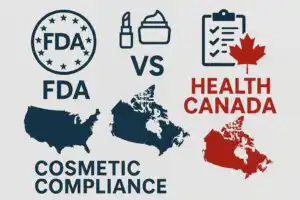
How FDA and Health Canada Regulate Cosmetics Differently Thinking about launching your cosmetic line in North America? Whether you’re a
... Read more
Food additive submission may not be the flashiest part of launching a new food product in Canada, but it’s one
... Read more
Selling cosmetics on Amazon Canada can open up a world of opportunity, but it comes with strict compliance expectations. Recently,
... Read more
If you’re planning to launch a product like a protein bar, electrolyte drink, or mushroom supplement in Canada, it’s important
... Read more
If you plan to sell a natural health product in Canada, you’ve probably asked what an NPN is and why
... Read more
If you’re working in the medical device space and looking to expand into the Canadian market, here’s a question for
... Read more
If you’re trying to bring a food or supplement product to both the Canadian and US markets, you’ve probably already
... Read more
Submitting a medical device to the FDA can feel like navigating a maze. Even the most seasoned teams can overlook
... Read more
As of March 12, 2025 Health Canada has implemented changes to the Cannabis Act and its Regulations. These changes may
... Read more
The self-affirmed GRAS pathway may soon be eliminated. On March 10, 2025, HHS Secretary Robert F. Kennedy Jr. directed the
... Read more
Health Canada is conducting a public consultation on CBD regulations for natural health products, exploring a pathway to allow non-prescription
... Read more
GRAS in pet food – these four words can make a big difference in your product’s regulatory status. Understanding what
... Read more
Bringing a new substance into Australia’s listed medicines market can be challenging. The TGA approval for new substances process involves
... Read more
The introduction of Bill 96 in Quebec brings new challenges for businesses across Canada. As a result, this legislation emphasizes
... Read more
Navigating the FDA compliance process for shilajit can be challenging, especially if you’re new to the regulatory landscape. As shilajit
... Read more
Navigating Health Canada’s rules for probiotic health claims can feel overwhelming, especially with the growing demand for these products. Businesses
... Read more
The U.S. Food and Drug Administration (FDA) recently announced a uniform compliance date for food labeling regulations. This update establishes
... Read more
The U.S. Food and Drug Administration (FDA) has postponed the implementation of the Modernization of Cosmetics Regulation Act (MoCRA) Good
... Read more
Understanding the FDA classification system for medical devices is key to getting your product to market safely and efficiently. Knowing
... Read more
If you’re planning to bring veterinary health products (VHPs) into Canada, you’ve probably come across the terms VHP Canadian representative
... Read more
Learn about Health Canada’s transition strategy for infant formula regulations and ensure compliance before the December 31, 2024, deadline.
... Read more
Selling natural health products (NHPs) on Amazon Canada is a lucrative opportunity to expand your business and reach millions of
... Read more
Understand Health Canada’s 2025 fees for NHPs, drugs, medical devices, and cannabis. Stay compliant with Quality Smart Solutions.
... Read more
If you’re in the business of nicotine products like pouches, gums, patches, sprays, or lozenges (collectively known as nicotine replacement
... Read more
Are you trying to make sense of the FDA’s 510(k) pre-submission process? You’re not alone. Many companies, especially those new
... Read more
Are you looking to bring your infant formula to the Canadian market? Successfully navigating Canada infant formula registration is essential
... Read more
Introduction Preparing for an FDA audit can be challenging, especially for dietary supplement manufacturers who must meet stringent Good Manufacturing
... Read more
If you’re thinking about bringing a pharmaceutical product to the Canadian market, getting familiar with drug submission pathways is a
... Read more