MDEL Licence in Canada: What It Is, Who Needs One, and How to Obtain It

MDEL Licence in Canada: What It Is, Who Needs One, and How to Obtain It

In This Article:

Health Canada medical device establishment licence (MDEL) application documents

If your company manufactures, imports, or distributes medical devices in Canada, obtaining a medical device establishment licence (MDEL) is one of the first compliance questions to resolve. Health Canada issues the MDEL under the Medical Devices Regulations (SOR/98-282), and it applies to your business rather than to a specific product. 

The MDEL is often confused with the Medical Device Licence (MDL), which covers product-level approval instead. Depending on your device class and your role in the supply chain, you may need one, the other, or both. Getting this distinction right early shapes how smoothly the rest of your Canadian market entry goes. 

This guide walks through who needs an MDEL, what the application involves, and where companies most often run into avoidable delays. 

What Is an MDEL and Why Does It Exist? 

The MDEL is a company-level authorization. It applies to your establishment and the activities you’re authorized to perform, rather than approving a specific product. The MDL works differently: it’s a product-level licence required for Class II, III, and IV devices. A Class I device manufacturer selling directly into Canada needs an MDEL but not an MDL, while an importer distributing Class III devices needs both. 

Health Canada introduced the MDEL to maintain oversight of everyone in the medical device supply chain, not just the products moving through it. Because the licence ties your establishment to specific activities, it needs to stay current for as long as you carry out those activities. If your business changes and your MDEL doesn’t reflect that, you’re operating outside your authorized scope, even if the licence itself is technically still active. 

Your MDEL lists the activities your establishment may perform, whether that’s manufacturing, importing, or distributing. So if your business scope changes after you receive your licence, you’ll need an amendment to reflect the update. For example, if you start distributing a device class you weren’t previously licensed for, that’s non-compliance until your MDEL is amended, even though your original licence stays valid. 

Watch: MDEL Explained 

For a walkthrough of how the MDEL fits into Health Canada’s broader device licensing framework, watch

Who Needs an MDEL Licence in Canada? 

Health Canada requires an MDEL for any establishment that manufactures Class I medical devices in Canada, imports medical devices into Canada, or distributes medical devices as a wholesale distributor. The requirement applies broadly, but not universally, so it’s worth checking where your company actually falls. 

Who’s Exempt, and Where the Exceptions Get Tricky 

Retailers selling directly to end users are generally exempt, as are healthcare facilities using devices in the course of patient care, and individuals importing a device for personal use. If your company operates anywhere between the manufacturer and the retailer, though, you almost certainly need an MDEL. 

Two situations are easy to misjudge. A warehouse that strictly stores devices on behalf of an MDEL holder can qualify for an exemption, but that exemption disappears the moment the facility takes on a transactional role, such as buying, selling, or consigning devices. Similarly, while retailers themselves don’t need an MDEL, the exemption doesn’t remove the obligation from the supply chain. It simply shifts it upstream to whichever importer or distributor supplies them. 

Foreign Manufacturers 

Foreign manufacturers without a physical presence in Canada typically don’t need an MDEL themselves. Instead, their Canadian importer or distributor holds the MDEL and takes on the related regulatory responsibilities. If that manufacturer later establishes a Canadian subsidiary that imports or distributes the devices directly, however, that subsidiary needs its own MDEL. Understanding this distinction early helps you structure your market entry correctly, rather than assuming you need a licence you don’t, or missing one you do. 

What the MDEL Application Requires 

You submit your MDEL application to Health Canada’s Medical Devices Directorate using form FRM-0292. It requires detailed information about your establishment, the activities you intend to perform, and the device classes you’ll handle, along with the applicable fees, which vary based on your establishment’s size and scope of activity. 

QMS requirements depend on your role, and this is where companies most often mix up MDEL and MDL requirements. Manufacturers of Class II, III, or IV devices need a quality management system certified to ISO 13485 under the Medical Device Single Audit Program (MDSAP), but that certification requirement belongs to the MDL application, not the MDEL.  

For the MDEL itself, whether you’re a Class I manufacturer, importer, or distributor, Health Canada expects documented procedures for handling complaints, recalls, and distribution records instead. Confirming which requirement applies to your situation before you apply saves you from preparing documentation you don’t need, or missing documentation you do. Key documents to prepare include: 

  • A completed MDEL application form with your establishment details and authorized activities clearly identified 
  • Documented procedures for complaint handling, mandatory problem reporting, and recall management 
  • ISO 13485/MDSAP certification, if you’re applying for the related MDL as a Class II, III, or IV manufacturer 
  • Applicable fees submitted with your application 

You can review the full requirements in Health Canada’s official MDEL guidance document. 

How Long Does the MDEL Process Take? 

Health Canada’s published service standard is 120 calendar days for a decision on a complete application. This applies uniformly, whether you’re a manufacturer, importer, or distributor, and whether you’re filing a new application or an annual licence review. If your submission is incomplete, Health Canada returns it, and the clock only restarts once you resubmit. 

Because of this, it’s worth building the MDEL timeline into your product launch schedule well in advance. Starting the application close to a target launch date is one of the more common planning gaps we see, and a delay here can push back everything downstream of it. 

Maintaining and Amending Your MDEL 

Once Health Canada issues your MDEL, it needs ongoing upkeep. Your completed Annual Licence Review (ALR) application must reach Health Canada before April 1 each year for your licence to remain valid. Health Canada sends a courtesy reminder ahead of the deadline, but submitting on time is still your establishment’s responsibility. Missing it can result in cancellation, and reinstating a cancelled licence means restarting the full 120-day review from the beginning. 

You’ll also need to amend your MDEL if your business grows or changes direction. Adding a new device class, adding a new activity, or changing your establishment address each require an amendment before the change takes effect operationally. Keeping amendments current as you grow is far simpler than closing a gap during an inspection.  

Quality Smart Solutions’s MDEL registration and licensing service supports companies through both initial applications and ongoing amendments to keep their licence accurate. 

Common Reasons Health Canada Requests Additional Information 

Health Canada issues Requests for Additional Information (RAIs) most often for one of three reasons: missing documentation, inconsistencies within the application, or an unclear scope of activities. Of these, ambiguity about which device classes you handle and incomplete procedure documentation for complaints and recalls come up the most, and each RAI adds time to your review. 

Since these gaps are usually avoidable, a thorough pre-submission review tends to catch them before Health Canada does, particularly when your team is managing more than one regulatory file at a time. 

Frequently Asked Questions

Does a foreign manufacturer always need a Canadian MDEL?

Generally, no. A foreign manufacturer without a physical presence in Canada doesn’t need to hold an MDEL directly. Their Canadian importer or distributor holds it instead. If the manufacturer later establishes a Canadian subsidiary that imports or distributes the devices, that entity needs its own MDEL.

Health Canada can issue stop-sale orders, hold products at the border, or take enforcement action against an establishment operating without a valid MDEL. Securing your MDEL before commercial activity begins protects your launch timeline more reliably than working around a gap later. 

Yes. Your MDEL specifies both the activities and the device classes your establishment handles. Adding a new class to your portfolio requires an amendment before you begin importing or distributing those devices.

They’re separate requirements. The MDL is a product-level licence for Class II, III, and IV devices. The MDEL is a company-level licence for any establishment manufacturing, importing, or distributing devices in Canada. An importer of Class II to IV devices typically needs both; a Class I manufacturer selling its own devices typically needs only the MDEL.

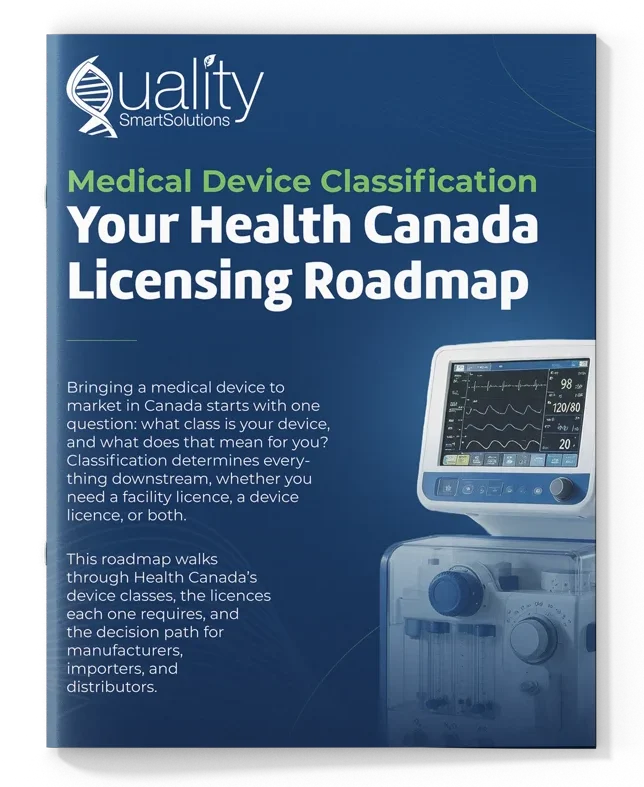
Medical Device Classification Guide

Know your device class before you plan your licensing path. This guide walks through Health Canada's four device classes, MDL and MDEL requirements, and the decision path to market.

Key Takeaways 

  • An MDEL is required for any establishment that manufactures Class I devices, imports, or distributes medical devices commercially in Canada, with specific exemptions for retailers, healthcare facilities, and personal-use imports. 
  • Health Canada’s service standard is 120 calendar days for a complete application, applying equally to manufacturers, importers, and distributors. 
  • ISO 13485/MDSAP certification is a requirement of the MDL, not the MDEL. 
  • Your MDEL must be renewed annually before April 1, and any change in activities, device classes, or establishment details requires a formal amendment beforehand. 
  • Incomplete applications trigger Requests for Additional Information and restart the review clock, so thorough preparation is worth the extra time upfront. 

Moving Forward with Confidence 

The MDEL process is well-defined once you know which requirements apply to your role, but incomplete submissions, missed renewals, and unlicensed activity can each set your launch back by months.  

If your team is preparing for a Canadian market entry, or needs to bring an existing MDEL into compliance, we can help you work through the process. Contact our regulatory experts at Quality Smart Solutions to discuss your MDEL application and next steps. 

0/5 (0 Reviews)
Picture of Gautamee Choudry Thyagaraj
Gautamee Choudry Thyagaraj

Regulatory Affairs Solutions Specialist

Regulatory Affairs professional with a strong background in compliance, quality systems, and medical device regulatory strategy. At Quality Smart Solutions (QSS), Gautamee contributes to practical regulatory and quality support, helping clients navigate complex requirements with clarity and structure across global markets. An RCC-MDR professional and BSI-Certified ISO 13485/MDSAP Lead Auditor, she brings a grounded focus on real-world regulatory implementation, translating complex compliance topics into clear, actionable guidance for clients and teams. Outside of work, Gautamee enjoys travelling, cooking, and exploring different cultures and histories around the world.

Related Articles
We use cookies to display personalized content, analyze site traffic, provide recommendations, and ensure you have a great browsing experience. By continuing to use our site, you consent to our use of cookies. Privacy Policy.