

On August 11, 2026, the U.S. Food and Drug Administration (FDA) released final guidance for manufacturers and processors of fresh-cut produce under the FSMA Current Good Manufacturing Practice, Hazard Analysis and Risk-Based Preventive Controls for Human Food (PCHF) rule. The guidance provides recommendations and examples to help food businesses implement PCHF requirements and protect ready-to-eat fresh-cut products from biological hazard contamination.
The finalized document replaces FDA’s 2008 fresh-cut produce guidance and reflects public comments submitted on an October 2018 draft. For processors of chopped lettuce, cut cantaloupe, diced onions, shredded carrots, and similar products, this update represents the agency’s current thinking on contamination prevention across the supply and processing chain.
Why Fresh-Cut Produce Requires Specific Regulatory Attention
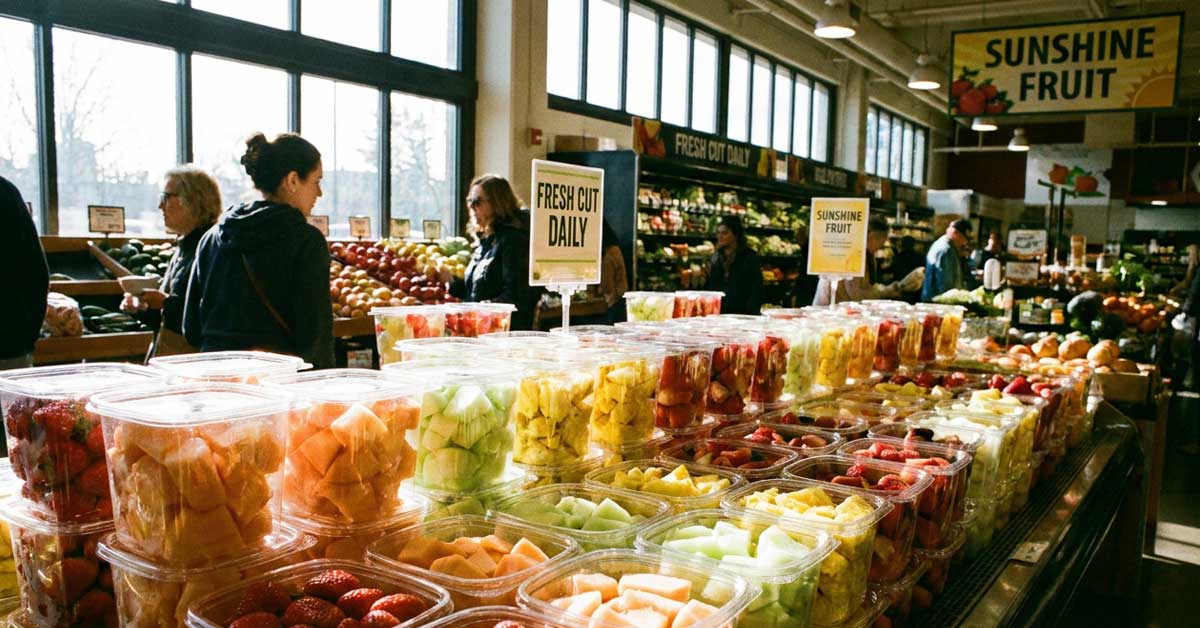
Fresh-cut produce sits in a distinct risk category. Unlike many processed foods, fresh-cut items do not undergo a kill step such as cooking, pasteurization, or freezing that would eliminate pathogens introduced during growing, transport, manufacturing, or retail handling. Because most fresh-cut products are sold ready-to-eat, contamination that enters the supply chain at any point has a direct path to consumers.
FDA defines fresh-cut produce as any fruit or vegetable physically altered from its whole state, through chopping, dicing, peeling, or shredding, without additional processing that would render it shelf-stable. The absence of a terminal treatment step, combined with the multiple touchpoints in a typical fresh-cut supply chain, means contamination risks can compound at several stages, including when products are commingled with others at the processor or retail level.
What the Final Guidance Covers
The guidance aligns fresh-cut produce operations with the PCHF rule. It does not introduce new regulatory obligations. Instead, it clarifies how existing PCHF provisions, including hazard analysis and preventive controls, apply to the realities of fresh-cut processing environments.
FDA has also encouraged industry to go beyond the guidance itself, stating that it wants manufacturers to continue advancing food safety practices, including through commodity-specific Best Practice documents. This reflects the scope of the fresh-cut sector: a single guidance document cannot address every variable across such a diverse product category.
FDA first released a draft version of this guidance in October 2018 for public comment. The agency reviewed those submissions before finalizing the document in August 2026. The 2018 draft was itself an update to the 2008 FDA guidance on fresh-cut produce, which predates the PCHF rule and did not map onto FSMA’s risk-based preventive controls framework. The 2026 final guidance supersedes that earlier document.
What This Means for Your Business
For food manufacturers and processors handling fresh-cut produce, the release of this final guidance has practical implications. It reflects FDA’s current thinking on how PCHF requirements apply to fresh-cut operations and gives processors a reference point for food safety plan development.
Companies that built their food safety plans against the 2018 draft, or the earlier 2008 document, should conduct a gap assessment to identify whether updates are needed. The final guidance may include refinements or examples not present in the draft, and plans that reflect the finalized document are generally better positioned ahead of an FDA inspection or a retail customer audit. Our U.S. FDA food compliance services support this kind of gap assessment and food safety plan review for companies working through PCHF requirements.
Beyond compliance, FDA’s call for industry-developed Best Practice documents suggests an expectation that leading processors will do more than meet the regulatory floor.