
Bring Your Traditional Food Product to the European Market

QSS helps companies outside the EU submit traditional food notifications and applications under Regulation EU 2015/2283. If you have a food with a documented history of safe use in your country and you want to market it in the EU, we can tell you what the process requires and get your dossier submission-ready. 
What the Traditional Food Pathway Involves

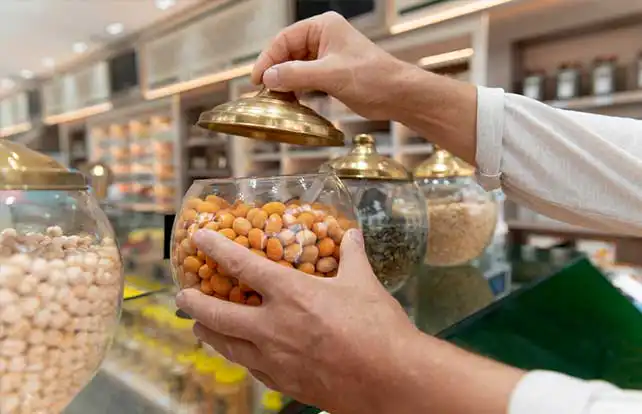
Under Regulation EU 2015/2283, companies wishing to place a traditional food from a third country on the EU market may submit a notification to the European Commission rather than going through the full novel food authorization process. This pathway is available when the food has a documented history of safe use in a non-EU country, meaning it has been part of a normal diet for at least 25 years in a significant portion of that country's population. 

The notification must demonstrate the food's composition, its proposed conditions of use, and the evidence supporting its history of safe use. EFSA evaluates the notification and, if no duly reasoned safety objections are raised by a Member State or EFSA itself, the food can be placed on the EU market. If objections are raised, the notifier may be required to submit a full application for authorization under Article 16 of the regulation, which involves a more detailed scientific assessment. 

Preparing a dossier that meets EFSA's data quality expectations and the administrative requirements of the Transparency Regulation is a process that requires careful preparation. QSS works with companies from the initial product assessment to dossier compilation and submission, so nothing is missed before your notification reaches the European Commission. 

Our EFSA Traditional Food Services

We evaluate your food product’s regulatory status under Regulation EU 2015/2283, confirm whether the traditional food notification pathway applies, and identify what evidence will be required to support your dossier.

We help you compile and structure the evidence needed to substantiate your food’s history of safe use in a third country, including composition data, consumption data, and proposed conditions of use, in the format EFSA expects.

We prepare your full notification dossier in line with EFSA’s current scientific and administrative guidance, reviewing it against EFSA’s published checklists before submission to identify and close any gaps. 

We manage the submission process through the E-submission Food Chain platform and support any follow-up communication with the European Commission or EFSA during the review period.

If safety objections are raised during the notification process, we support the preparation of a full traditional food authorization application under Article 16 of Regulation EU 2015/2283.

For food supplement products, where EU Member States each maintain their own notification procedures, we provide country-specific guidance and support to help you navigate the requirements of your target markets.

Why Work with Us

Since 2007 supporting companies entering regulated markets across 74 countries, including the EU
Deep knowledge of EFSA's dossier requirements and what the Transparency Regulation means for your submission
Practical support from product assessment through to dossier compilation and submission
Country-specific guidance available for EU Member State notification procedures
Long-term compliance partners for post-authorization support and regulatory maintenance

EFSA and EU Compliance Insights and Resources 

Explore articles, blogs, and videos on EFSA regulations, traditional food notifications, and entering the European market. 

Frequently Asked Questions 

A traditional food from a third country is a food that has a documented history of safe use, meaning it has been part of the normal diet of a significant portion of a population in a non-EU country for at least 25 years. The food must also not have been placed on the EU market in significant quantities before May 2015, when the current regulation came into force.

A traditional food notification is a simplified pathway available to foods with an established history of safe use outside the EU. It is faster and requires less scientific data than a full novel food application. However, if a Member State or EFSA raises duly reasoned safety objections during the notification review, the notifier may need to submit a full authorization application under Article 16 of Regulation EU 2015/2283.

Your dossier must include information on the food’s composition, its history of safe use in the country of origin, its proposed conditions of use in the EU, and an assessment of any potential health concerns. EFSA’s guidance identifies the specific type and quality of information required, and we prepare your dossier to meet those standards.

Once a valid notification is submitted to the European Commission, Member States and EFSA have a set review period to raise objections. If no objections are raised, the food can proceed to market. If objections are raised, the timeline extends into the full authorization process. We help you prepare a complete, well-structured dossier to support the most straightforward path through the process.

Not exactly. Regulation EU 2015/2283 covers food and food ingredients. Food supplements are also governed by Directive 2002/46/EC, and each of the 27 EU Member States maintains its own notification procedure with its own timelines and requirements. We provide country-specific support to help you navigate the markets relevant to your product.

Yes. Certain confidential or proprietary data submitted in support of a traditional food notification or application can be protected from public disclosure for a period of five years, subject to EFSA’s confidentiality process. We can advise on what qualifies for protection and how to request it.

Need help or have a question?

0/5 (0 Reviews)
We use cookies to display personalized content, analyze site traffic, provide recommendations, and ensure you have a great browsing experience. By continuing to use our site, you consent to our use of cookies. Privacy Policy.