

Navigate the FDA Premarket Approval Process for Class III Devices 

FDA premarket approval is the most rigorous device review pathway, required for Class III devices that cannot rely on substantial equivalence to an existing predicate. Since 2007, QSS has supported device manufacturers in building PMA submissions that meet FDA's evidentiary standard. 
The Stakes of Class III FDA Approval

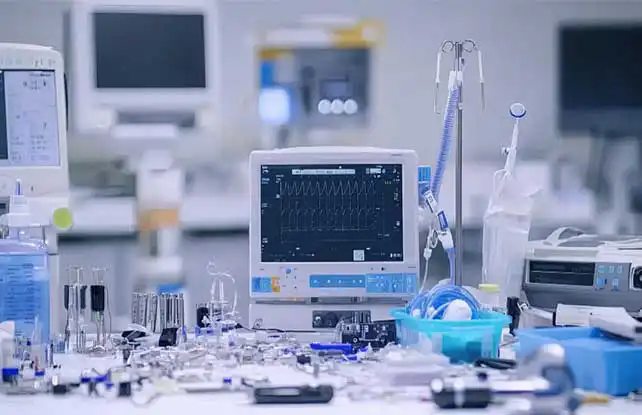
Class III medical device FDA approval applies to devices that sustain or support life, are implanted, or present a potential unreasonable risk of illness or injury. Products in this category, from implantable cardioverter-defibrillators to certain diagnostic imaging systems, cannot enter the U.S. market without FDA authorization. For manufacturers, the PMA pathway is not optional: it is the regulatory condition for commercialization. 

The FDA PMA submission requirements are among the most comprehensive in device regulation. A complete application includes valid scientific evidence, typically data from well-controlled clinical investigations, along with detailed manufacturing information, proposed labeling, and responses to FDA questions issued during review. Incomplete or inadequately supported submissions result in not-approvable letters that extend timelines and delay market entry. The cost of a deficient submission is measured in months, not weeks.

Approval does not end the regulatory relationship. PMA holders carry ongoing obligations: post-approval studies, periodic reporting, and the requirement to seek FDA approval before implementing changes to an approved device or its labeling. Companies that treat PMA as a one-time event rather than an ongoing program frequently encounter compliance gaps that put their approval status at risk. 

How QSS Supports the PMA Process

Not every Class III device has a straightforward path to PMA. QSS reviews your device classification, intended use, and existing evidence base to confirm whether PMA is the right pathway, or whether a De Novo request, Breakthrough Device Designation, or other FDA program may apply. This assessment shapes the submission strategy before resource-intensive work begins. 

FDA’s Pre-Submission program allows manufacturers to engage with FDA reviewers before filing a PMA application. QSS prepares the Pre-Sub package, drafts targeted questions, and helps interpret FDA feedback to reduce uncertainty before the formal submission. Early alignment with FDA on clinical protocol, study endpoints, and technical file requirements reduces the risk of deficiency letters at the application stage. 

QSS supports the assembly of the full PMA application, including the compilation of valid scientific evidence, preclinical data summaries, manufacturing and quality system documentation, proposed labeling review, and the organization of all required sections under 21 CFR Part 814. Applications are reviewed internally for completeness and regulatory alignment before submission to FDA. 

PMA applications for most Class III devices require clinical data from well-controlled investigations. QSS advises on study design, endpoint selection, and protocol structure to ensure the clinical evidence package meets FDA’s standard. This includes guidance on investigational device exemption (IDE) requirements for studies conducted in the U.S. 

FDA issues questions and deficiency letters during PMA review. QSS prepares substantive, well-documented responses that address each agency question directly and advance the review. Managing this correspondence efficientlyand avoiding responses that open new questions, is a meaningful factor in overall review timeline. 

Approved PMA holders must meet ongoing obligations including post-approval study execution and reporting, annual PMA reports, and supplemental PMA submissions for device or labeling changes. QSS supports manufacturers in building and maintaining a post-approval compliance program that keeps them current with FDA requirements. 

Why Medical Device Manufacturers Work With QSS

Regulatory depth in FDA device compliance since 2007.
Science and submission mechanics handled in one place.
U.S. market entry support for international manufacturers at every stage.
Always current with FDA guidance so clients never build to an outdated standard.

Go Deeper on FDA Device Compliance 

FDA Premarket Approval: Common Questions

FDA Premarket Approval (PMA) is the FDA’s most stringent device review process. It is required for Class III medical devices; those that sustain or support life, are implanted in the body, or present a potential unreasonable risk of illness or injury. Unlike Class I and Class II devices, which may be marketed through exemption or 510(k) clearance, Class III devices must receive FDA approval before they can be legally sold in the United States. If no valid predicate device exists for a 510(k), or if FDA has determined that general controls and performance standards are insufficient to ensure safety and effectiveness, PMA is the applicable pathway. 

FDA has a 180-day statutory review period for PMA applications, but the total timeline from submission to approval is typically longer. FDA may issue major deficiency letters that pause the clock and require substantive responses. Pre-submission preparation, including clinical study execution, can add considerable time before the application is even filed. Manufacturers should plan for a multi-year process from device concept to approval, though timelines vary based on device complexity, the quality of the clinical evidence package, and how efficiently FDA review correspondence is managed. 

Most PMA applications require valid scientific evidence from well-controlled clinical investigations demonstrating that the device is safe and effective for its intended use. The specific evidence requirements depend on the device type, its risk profile, and FDA guidance applicable to that device category. In some cases, FDA will accept data from studies conducted outside the U.S., subject to certain conditions. Early alignment with FDA through the Pre-Submission program helps manufacturers design clinical studies that meet the agency’s evidentiary standard before the study begins. 

A PMA supplement is required when an approved manufacturer wants to make changes to a device, its labeling, or its manufacturing process that could affect safety or effectiveness. The type of supplement required depends on the nature of the change: some modifications qualify for a 30-day notice or real-time review, while more significant changes require a traditional or panel-track supplement. Manufacturers must evaluate each proposed change against FDA requirements before implementing it, as proceeding without the appropriate approval is a serious compliance issue. 

Yes. International manufacturers can submit PMA applications to FDA, though they must meet all the same requirements as U.S.-based manufacturers. International manufacturers are also required to designate a U.S. agent for FDA correspondence. Clinical data generated outside the U.S. may be accepted under certain conditions, including compliance with ICH E6 Good Clinical Practice guidelines. Understanding how to structure a PMA application as an international company entering the U.S. market is an area where early regulatory guidance makes a meaningful difference. 

FDA may condition PMA approval on the completion of post-approval studies (PAS) to monitor long-term safety and effectiveness in a real-world patient population. These studies have defined protocols, enrollment timelines, and reporting intervals. Manufacturers must submit progress reports to FDA on a schedule specified in the approval order. Failure to conduct or report on required post-approval studies is a compliance issue that can result in FDA enforcement action, including withdrawal of approval. 

Need Help Or Have A Question?

0/5 (0 Reviews)
We use cookies to display personalized content, analyze site traffic, provide recommendations, and ensure you have a great browsing experience. By continuing to use our site, you consent to our use of cookies. Privacy Policy.