

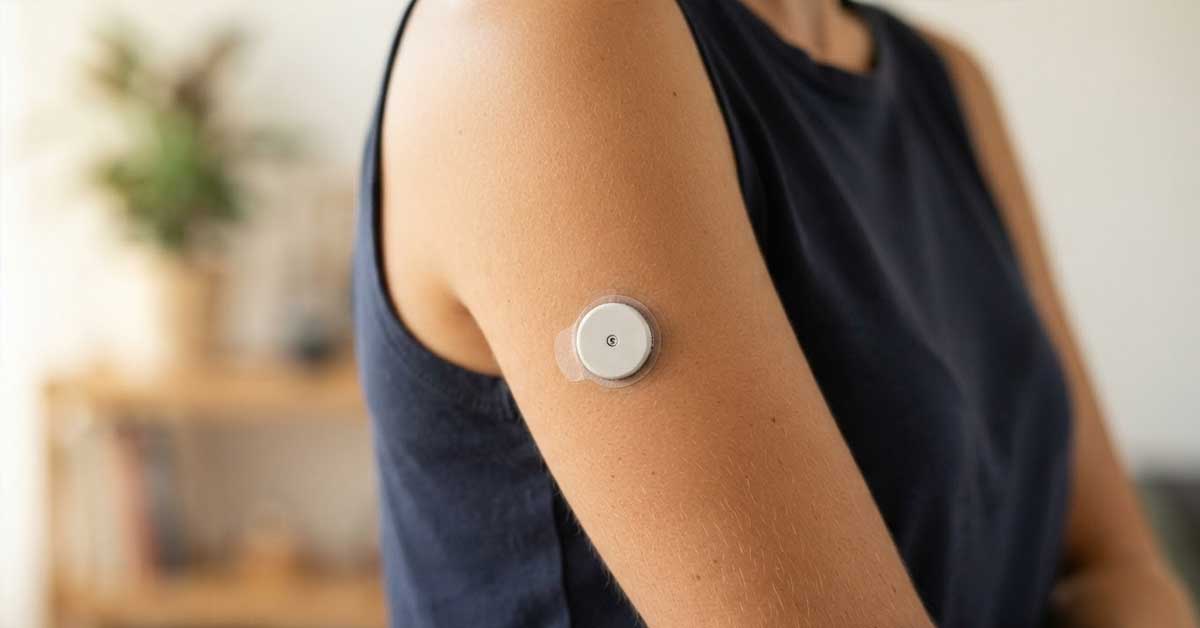
The U.S. Food and Drug Administration (FDA) has authorized the Libre Duo 10 Day Continuous Dual Glucose Ketone Monitoring System, the first wearable device in the world to perform continuous dual glucose ketone monitoring in a single device. Developed by Abbott Diabetes Care, the system is authorized for use in people aged 2 years and older living with diabetes. The authorization was granted through the De Novo premarket review pathway, which applies to low to moderate risk devices of a novel type.
The Libre Duo 10 Day is also the first wearable device in the United States to continuously track ketone levels at all. For the estimated 2.1 million Americans living with type 1 diabetes, this authorization addresses a significant clinical gap: the inability to monitor rising ketones in real time without a separate, point in time test.
With continuous dual glucose ketone monitoring now available in a single wearable, clinicians and patients alike gain a more complete picture of metabolic status around the clock.
What the Device Does and How It Works
The Libre Duo 10 Day measures both ketone and glucose concentrations in the interstitial fluid, just beneath the skin, once every minute over a 10-day wear period. Readings transmit wirelessly to a smartphone app, where users can view current levels and trends for both analytes. The device can send automated alerts when ketone levels cross a concerning threshold, giving patients and caregivers an opportunity to intervene early.
This matters most in the context of diabetic ketoacidosis, or DKA, a serious complication that develops when the body produces excess ketones because it cannot use glucose for energy. Ketone testing previously required a separate, single-point-in-time test that couldn’t show whether levels were rising or falling, a distinction that can be clinically decisive. The Libre Duo 10 Day changes that.
Michelle Tarver, M.D., Ph.D., Director of the FDA’s Center for Devices and Radiological Health, noted that continuous visibility into rising ketone levels “can be the difference between early intervention and a life-threatening emergency.” The FDA emphasized that ketone readings should always be interpreted alongside glucose data and clinical symptoms.
Regulatory Pathway and Clinical Evidence
Abbott Diabetes Care received marketing authorization through the De Novo pathway, which establishes a new device classification for a product type the FDA has not previously reviewed. This pathway applies to devices that present low to moderate risk and are genuinely novel in design or function.
Alongside the authorization, the FDA is establishing special controls for this device class, covering labeling standards and performance testing criteria, which together with existing general controls provide a reasonable assurance of safety and effectiveness.
Prior to the De Novo submission, the FDA granted the Libre Duo 10 Day Breakthrough Device designation, reserved for devices addressing life-threatening or irreversibly debilitating conditions. The designation supports more frequent, collaborative engagement between the FDA and the sponsor during development, with the goal of expediting review without compromising scientific rigor.
The clinical evidence came from six studies enrolling more than 600 participants aged 2 and older, assessing the accuracy of both the ketone and glucose sensing functions across clinically relevant values over the full 10-day wear period. The data showed the device accurately detected clinically meaningful differences in ketone levels, including elevated readings occurring before the onset of DKA.
Alignment With the FDA’s Home as a Health Care Hub Initiative
The Libre Duo 10 Day authorization fits within a broader FDA strategic direction. The agency’s Home as a Health Care Hub Initiative is focused on advancing patient-centered devices that support meaningful health monitoring outside of clinical settings. A wearable that provides continuous data on two key metabolic markers, delivered directly to a smartphone, reflects the kind of integration between clinical-grade monitoring and everyday life that the initiative is designed to encourage. For device sponsors developing products in this space, the FDA’s receptivity to this type of submission is a meaningful signal about the agency’s current priorities.
What This Means for Your Business
This authorization creates the first De Novo predicate for continuous dual glucose ketone monitoring, meaning future 510(k) applicants in this category will need to address the special controls the FDA is now establishing for performance and labeling. If you’re working on adjacent multi-analyte wearables, watch for that documentation once published.
This case also reinforces Breakthrough Device designation as a real option for wearable diagnostics with clear, unmet clinical need, and it’s a reminder that broad pediatric labeling claims now require age-appropriate clinical data, not extrapolation from adult results.
If your team is mapping out a regulatory strategy for a novel or multi-analyte device, our FDA Medical Device Compliance Consulting team can help you assess whether De Novo, 510(k), or another pathway fits your product.
Key Takeaways
- The FDA has authorized the Libre Duo 10 Day as the world’s first wearable device capable of continuous dual glucose ketone monitoring in a single system, cleared for patients aged 2 and older.
- Authorization was granted through the De Novo premarket review pathway, establishing a new device classification with accompanying special controls for labeling and performance testing.
- Abbott received Breakthrough Device designation prior to submission, which facilitated interactive FDA collaboration and expedited review.
- Clinical support included six studies with more than 600 participants; results confirmed accuracy across clinically relevant ketone and glucose ranges over the full 10-day wear period.
- The new De Novo classification creates a regulatory reference point for subsequent 510(k) applicants developing devices in the continuous dual analyte monitoring category.