

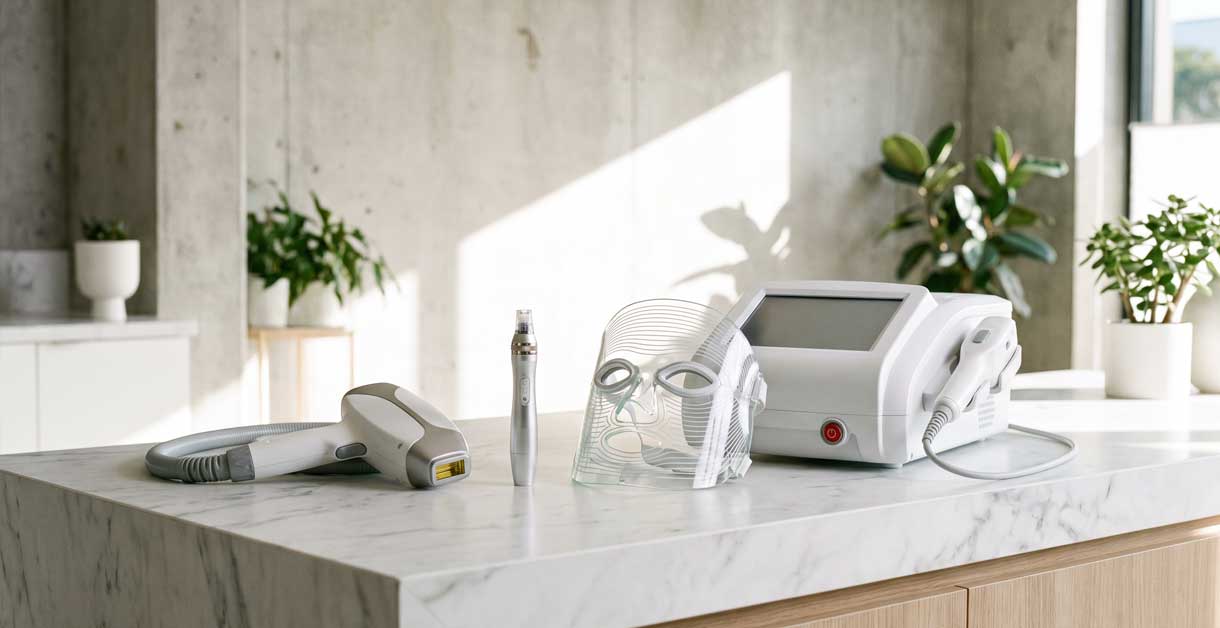
 Many aesthetic devices sold in Canada meet the definition of a medical device under the Food and Drugs Act, because they are intended to modify the structure of the body or the function of its parts. For these aesthetic devices, classification is the first regulatory decision.
Health Canada groups non-in vitro diagnostic devices into four risk-based classes under the Medical Devices Regulations, and the class determines which licences apply, what evidence is needed, and how much preparation time to plan for.
The answer is not always straightforward. Devices that look similar can land in different classes depending on energy output, invasiveness, materials, and intended use, so getting this step right keeps a submission on the correct pathway from the start.
How Does Health Canada Classify Aesthetic Devices By Risk?
The classification rules are set out in Schedule 1 of the Medical Devices Regulations, with Class I representing the lowest risk and Class IV the highest. The class determines whether a Medical Device Licence (MDL) is required before a device can be sold in Canada. For a closer look at the rules, see our Medical Device Classification Guide for Health Canada.
Class I Devices
Class I devices do not require an MDL, but Class I manufacturers need a Medical Device Establishment Licence (MDEL) unless they sell only through an importer or distributor that holds one. In aesthetics, Class I generally covers simple, non-powered tools that do not penetrate the skin.
Class II Devices
Class II is the default class for active therapeutic devices that deliver energy to the body and for short-term surgically invasive devices, so many aesthetic devices start here. A Class II MDL application relies on the manufacturer’s attestation of safety, effectiveness, and labelling compliance, supported by a quality management system certificate issued under the Medical Device Single Audit Program (MDSAP). Health Canada does not review clinical evidence before issuing a Class II licence.
Class III and Class IV Devices
Class III and IV devices require an MDL and an MDSAP certificate, and Health Canada reviews the safety and effectiveness evidence before issuing a licence. Energy-based devices move to Class III when the energy delivered is potentially hazardous, given its nature, intensity, and the part of the body treated. Class IV is less common in aesthetics, but devices made from or incorporating animal or human tissue are generally Class IV, and breast implants are specifically designated as Class IV.
How Are Common Aesthetic Device Types Classified?
The examples below are starting points rather than determinations. The final class depends on each device’s design, output, and labelled intended use, and the final decision rests with Health Canada.
1. Laser Hair Removal Devices, IPL Devices & Tattoo Removal Lasers
Health Canada’s guidance lists therapeutic laser and IPL devices for hair removal as Class III examples where they operate at Class 3B or Class 4 laser levels under IEC 60825-1. High-power tattoo removal lasers are assessed under the same energy rule and will often fall into Class III. Lower-output devices, including some intended for home use, may be Class II. Our guides to laser hair removal device compliance and selling beauty devices on Amazon Canada cover these categories in more detail.
2. RF Microneedling and Microneedling Devices
Microneedling devices penetrate the skin and are generally treated as short-term surgically invasive devices, which default to Class II. RF microneedling adds energy delivery, so both the invasive device rules and the energy rule apply, and the higher resulting class governs. Depending on energy output and treatment depth, an RF microneedling system may be Class II or Class III.
3. Radiofrequency Skin Tightening Devices and HIFU Machines
Non-invasive radiofrequency skin tightening devices and high-intensity focused ultrasound (HIFU) machines start at Class II as active therapeutic devices. They move to Class III where the energy delivered is potentially hazardous, with focal depth and power settings carrying significant weight in that assessment.
4. Dermal Fillers
Injectable dermal fillers are surgically invasive and are typically absorbed by the body or remain in place for 30 days or more, which places them in Class III. Fillers made from or incorporating animal-sourced materials, such as animal-sourced hyaluronic acid, are generally Class IV.
What Factors Determine Which Class Applies To Your Aesthetic Device?
The rules consider how long the device contacts the body, how invasive it is, whether it is active, whether it delivers energy or a substance, and which part of the body it contacts. Health Canada’s guidance on the risk-based classification system for non-in vitro diagnostic devices sets out each rule with examples. Where more than one rule applies, the higher class governs.
Intended use is one of the most consequential inputs. A device labelled for non-invasive skin tightening and the same device labelled for subcutaneous fat reduction may not sit in the same class, so regulatory teams should define intended use precisely before drafting an application.
An aesthetic product that combines a device with a drug, such as a dermal filler containing a local anaesthetic, is assessed under Health Canada’s policy on drug and medical device combination products, which assigns a regulatory framework based on the product’s principal mechanism of action.
How Does Device Classification Affect Your Submission Strategy?
A team that prepares a Class II package for a device Health Canada ultimately classifies as Class III will need to build a substantially different application, with the time and internal resources that requires. Our team works with companies preparing Medical Device Licence applications in Canada across all device classes, and classification review is always the starting point.
Post-market obligations apply at every class. Mandatory problem reporting, recall reporting, complaint handling, and distribution records apply to all licensed devices, while Class II, III, and IV manufacturers must also maintain MDSAP certification and prepare periodic summary reports. Planning for these at the classification stage keeps your compliance program aligned with Health Canada’s expectations.