


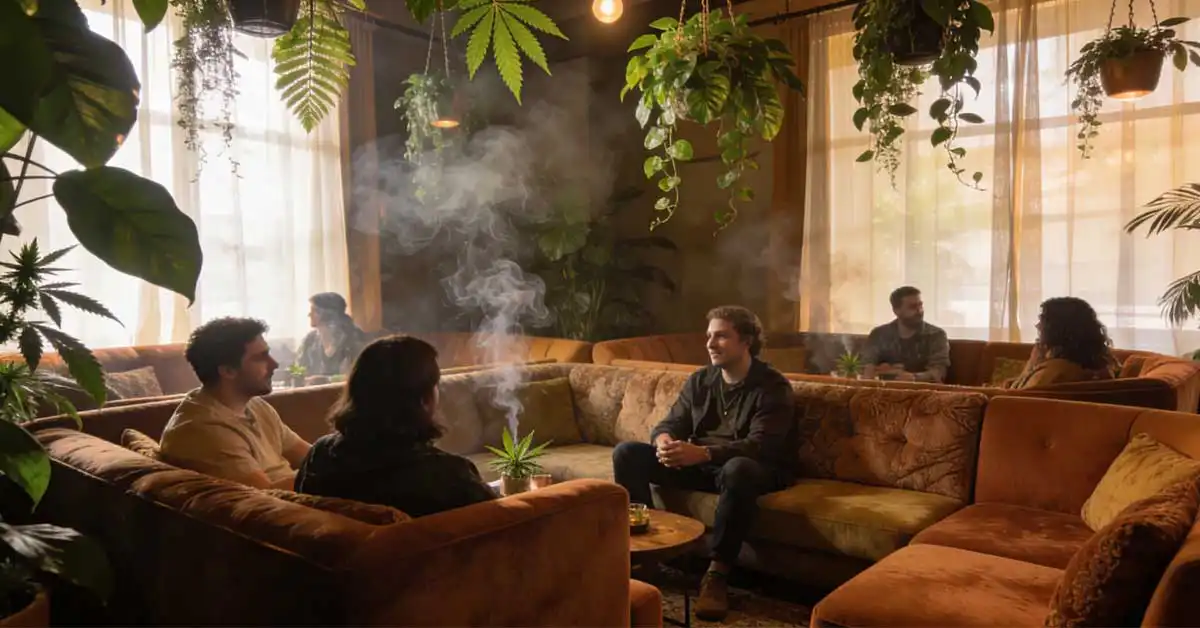
Canada legalized recreational cannabis in 2018. However, nearly a decade later, one of the most natural extensions of that market, a licensed space where adults can consume cannabis socially, still does not have a clear regulatory home in most of the country. No Canadian province has established a dedicated licensing pathway for permanent cannabis consumption lounges. Health Canada does not issue permits for cafes or consumption spaces.
That gap matters for planning purposes. Operators and advisors who approach this business model assuming a functioning licensing framework exists risk building concepts around regulatory pathways that are not actually available, and discovering that only after timelines and budgets are already committed. The regulatory picture, province by province, is the starting point for any honest assessment of this business concept.
What the Cannabis Act Does and Does Not Cover
The Cannabis Act establishes Canada’s national framework for cannabis, including permitted licensed activities, product sale conditions, and promotion restrictions. It does not create a federal licence category for cannabis consumption lounges. On-site social or hospitality consumption falls under provincial and territorial jurisdiction, which means the regulatory picture varies considerably depending on where you operate.
That said, federal rules still apply to any cannabis consumed in a lounge setting. Products must originate from federally licensed sources. Possession limits remain in effect. The Cannabis Act’s promotion and advertising restrictions also apply regardless of setting.
A lounge that displays cannabis branding, promotes specific products to guests, or permits consumption by minors is not exempt from federal enforcement simply because a provincial permit exists. Health Canada’s guidance on cannabis promotion prohibitions sets out exactly where those lines are drawn.
The Provincial Picture: What Actually Exists
Alberta
The Alberta Gaming, Liquor and Cannabis Commission (AGLC) does not offer a hospitality licence for permanent on-site cannabis consumption spaces. What Alberta has introduced is a temporary retail licence extension that allows existing licensed retailers to sell cannabis at events and festivals.
Initially limited to adults-only events, this was later expanded to permit sales at events where minors are present, provided cannabis sales occur exclusively within designated 18+ zones. These permits require a detailed site plan, documented security procedures, and municipal approval. They are event-specific authorizations, not a lounge licensing framework.
British Columbia
British Columbia’s Liquor and Cannabis Regulation Branch introduced rule changes in 2024 that allow cannabis consumption on existing outdoor patios where tobacco smoking and vaping are already permitted, subject to local bylaws. Consumption is limited to outdoor spaces attached to licensed retail stores. There is no standalone indoor lounge licensing framework in BC, and any concept along those lines remains subject to municipal approval.
Manitoba
Manitoba is one of the few provinces to formally acknowledge cannabis consumption lounges in its regulatory framework, permitting them in certain municipalities subject to local approval. No province-wide licensing pathway exists, however. Whether a lounge concept is viable depends entirely on the municipality involved, and that variability makes consistent province-wide planning difficult.
Ontario
There is currently no Ontario licensing pathway for cannabis consumption lounges. In 2023, the Ontario Chamber of Commerce called on the province to allow privately owned lounges. The Ford government rejected the proposal. Some operators have explored openings under a research licence model, though Health Canada has been working to close that avenue. For anyone planning a permanent lounge concept in Ontario, there is no established regulatory path to follow at this time.
Saskatchewan
The Saskatchewan Liquor and Gaming Authority (SLGA) stated clearly at the time of legalization that it would not be permitting consumption lounges, leaving open only the possibility that other permit types could be considered at a later date. As of 2026, that position has not changed. Saskatchewan’s regulatory framework remains focused on retail store permits.
Advertising and Promotion Restrictions Apply Inside Lounges Too
One area that consistently surprises operators is how far Canada’s cannabis advertising and promotion restrictions reach. The Cannabis Act’s prohibitions extend to commercial communications in any setting, including controlled-access spaces. Operating in a semi-private lounge environment does not reduce compliance obligations.
In practice, this means in-lounge menus, décor, staff-facing materials, and branded content all carry compliance implications. A display that highlights flavour profiles or lifestyle associations may cross a line. A loyalty program that incentivizes purchases could raise similar concerns. Any guest-facing content should be reviewed against the promotion prohibitions before launch.
Municipal Licensing and Zoning Add Another Layer
Even in provinces where consumption concepts are theoretically permissible, municipal zoning and licensing requirements introduce additional complexity. Municipalities in many provinces retain authority over where cannabis retail and hospitality operations can locate, how far they must sit from schools or community centres, and in some cases whether any form of consumption concept is permitted within their boundaries at all.
Common municipal considerations include zoning bylaws that restrict cannabis hospitality to specific commercial or mixed-use designations, distance requirements from sensitive uses, building and fire code compliance for ventilation systems, and the absence of a defined business licence category for cannabis hospitality in many municipalities.
Confirming local permissibility before a provincial application is submitted is not optional. Zoning conflicts discovered after the fact are costly to resolve.
Where the Advocacy Is Headed
The absence of a functioning lounge licensing framework across most of Canada does not mean the conversation is over. Several organizations are actively working to advance cannabis consumption space policy, and their progress is worth tracking for anyone with a long-term interest in this space:
- Cannabis Council of Canada (C3)
- Association of Canadian Cannabis Retailers (ACCRES)
- Ontario Cannabis Policy Council (Ontario Chamber of Commerce)
- Canadian Cannabis Chamber of Commerce (CCCC)
- Canadian Cannabis Tourism Alliance (CCTA) — the organization most directly focused on building a legislative framework that supports cannabis consumption and sales in a consumer hospitality context